Monday, 17 March 2014

17/03/14 - Where are consumer's buying home decoration products?

IN STORE BUYING
The market is dominated by volume-driven retailers that are able to offer low prices, usually for mass produced items, often manufactured in China and other developing countries. The remaining specialists need to create a point of difference in terms of design or sourcing destination (eg made in the UK) in order to justify a shopping trip to their stores rather than consumers simply picking up items as an add-on to a food or clothing purchase in a non-specialist store.
ONLINE BUYING
With almost half of consumers who have bought home accessories in the past year not having bought any of them online, there is clearly room for retailers to grow this category online. However there remain obstacles in that the look and feel of many home accessories like cushions, bed linens and towels is very important. Improving websites with videos, high-resolution photography and customer reviews may offer potential solutions to overcoming consumers’ hesitation about buying products without visiting a store.

17/03/14 - Bedroom Decoration

Storage is the key feature people want for bedrooms. They want to get the most storage for their available space (47%) and have useful storage features (38%) when thinking about a bedroom revamp.

Good quality matters to 45% and 24% agree that they would pay extra to get better quality. Only 17% want basic furniture at the lowest prices.

17/03/14 - Our Customer

HOW DOES OUR CUSTOMER SHOP?

IMAGE/COST CONSCIOUS
-          These consumers want the home to look good for visitors and are quite likely to entertain and spend time in the kitchen. They are not brand- or celebrity-conscious (only 3% seek out brands) and are not always changing things, with only 12% regularly updating the look of their home.
-          They want things to look good, but will not necessarily spend to achieve this, being more likely to make the best of what they have.
-          These consumers are more likely to be female and fall into two groups, the younger 25-34 family consumers and the retired over-65s. They are generally a middle income group.
-          There are some constraining financial influences on this group, although ultimately they like things to look good. As they are not always making changes, buying well and buying to last should appeal to them.
-          Advice and products that help them make a home look good and make entertaining easier may be the way to tap into their spending power.

HOME CHANGERS
-          For this group buying new homewares is closely related to redecorating and it is this aspect that should be encouraged. Putting together complete looks that show how a room can be transformed should encourage these consumers to buy across a range.
-          These consumers are generally aged 35-54, so at the family or third age lifestage. As a result the family and home are likely to be at the core of their lifestyle.

-          Consumers in this group are also usually reasonably well off making the more affluent  family group an important segment.

17/03/14 - Wallpaper sales

MINTEL REPORTS ON INTERIOR/WALLPAPER SALES

WHO BUYS?

-       MEN AND WOMEN

“Men and women display different shopping patterns. We see that women are particularly likely to have bought decorative homewares such as tableware (crockery and cutlery), bathroom accessories and soft furnishings. Even so, men play a big role in decisions about what to buy for the home and so retailers should make every effort to aim to appeal to both men and women.

-       FOR GIFTS

“Over a quarter of people (26%) had bought some kind of homewares as a gift in 2013. These purchases span a wide range of homewares and the most popular category is decorative accessories, which includes picture frames and ornaments (9%). These are popular with 16-24s (14%), so gifts that have appeal to a youth audience will perform well.

“The appeal of housewares as a gift extends across the ages. Apart from under-20s, around a fifth of consumers think of housewares as a good gift. Third age and retired consumers are perhaps the keenest housewares gift buyers. Older consumers may be buying for others so there may be more opportunity to encourage them to treat themselves since they do consider housewares a good present.

-       BRAND LOVERS

“Those looking for brands tend to favour the department stores like John Lewis and Debenhams. However, these two outlets differ considerably with John Lewis much more heavily favoured by those looking to buy gifts and its customers being more likely to have different tableware for different occasions. Debenhams, however, appeals to those who have redecorated recently, perhaps looking to upgrade their existing homewares items.”

“Key analysis: Retailers should be careful to design their ranges to cater for a spread of prices and affordability. By constructing the right price architecture, they will be able to encourage more volume of purchases. But it is important to create justification for the higher-priced lines, by highlighting better styling quality or product features. One way of doing this is to inject designer or celebrity names into the branding (eg Jamie Oliver tableware, or Orla Kiely linens).”

WHEN?
-        Poor weather in spring and summer 2012 compounded the DIY interior decorating sector’s underperformance.
-       “The unseasonal early-2013 weather will have dented start-of-season homeware sales for the sector. In the medium term, we think DIY retailers will be forced to cater to demand which will be less focused on traditional DIY.

-       “When the weather is dry, consumers are most likely to make DIY decoration plans. The weather creates an ease for rearranging the home and less of a time constraint is put in place when letting the space become liveable once again.”

Wednesday, 12 March 2014

09/03/14 - Children's interior trends

To help with the design side of the product I looked into interior trends for children. To fit with our girls design of florals I found a trend for summer next year called 'Country Florals'.

For the under the sea theme I collected a range of images to help inspire designing for the magnetic pieces for both boys and girls.


06/03/14 - Retailers

We decided that our product will be sold in four different outlets; John Lewis, Next Home, Graham and Brown and our own website.
I looked into John Lewis and Next to get a better understanding of what kind of products they sell.
Neither websites sold anything similar to ours which would give us little competition when selling within these retailers. However Next didn't sell any children's wallpapers on their website which is a problem. If Next don't sell their own wallpapers for children, they are unlikely to want to sell a wallpaper from an external company.


05/03/14 - Design Meet up

For each pack of magnetic pieces we have decided to have five pieces in each pack with four different designs meaning two pieces will be the same. Each piece will be 20x20cm and about 3mm thick.

We had the idea of having additional magnetic pieces made of just magnetic paper which would be flexible which had numbers and letters on for educational purposes. However this may over complicate our product.

We decided on three different products to sell.
- A starter pack; 2 metres of magnetic wallpaper and 2 magnetic pieces.
- A 10m roll of magnetic wallpaper.
- A pack (various designs) which each have 5 magnetic pieces in it.

After looking at the questionnaire results that Annabelle and Amy collected together and we found that the most common themes are: stars, football, animals, hearts and flowers.

We then decided on three different themes, one for boys - football, one for girls - flowers and one for both - sea creatures.

Our background wallpaper is going to be plain to keep our first year of costs lower. Perhaps after a year we could start to design patterned wallpaper.

4/02/14 - Eva Foam

One of the materials for our product is Eva foam. I have looked into how much it would cost to use this material and contacted a few companies to get quotes on costing and supplying us with it.

efoam.co.uk had a quotation section to their website where it was possible to get a quote for shaped eva foam in a variety of thicknesses and sizes straight away. for 20x20cm of eva foam at 7.5cm thick, it worked out at £10.95 or 10x10m would be £1669.70.
A slightly thinner foam at 4cm would be £894.72 for 10x10m. This price seems a little high for a product we wanted to aim at families.

I have also contacted Intecfoams but am yet to hear back to them.

28/02/14 - Gantt Project Planner

As the operations manager I have put together a project planner to help everyone understand the order of all the tasks that need to take place. Some tasks will need to take place before others and so I have put together our tasks with a timeline to ensure we finish our research in time.


27/02/14 - Feedback from presentations

Getting the feedback for our project's presentation was really helpful to help develop our ideas. The feedback raised some useful questions and gave us some things to think about.

- We need to rethink our sponsorship idea. If we are taking away their customers, leading market competitors are unlikely to sponsor us if we are selling a similar product at a lower price.

- The magnetic pieces need to be light weight so that children can move them around and play with them freely.

- Focusing on visually impaired children over complicates our product. It may be simpler and easier to focus just on young children  and just have UV elements for it's aesthetic properties. Our product would have a broader market without the label of visual impairment.

- The magnets shouldn't have any effect on electronics in the room e.g. the TV as the magnets are weak in comparison.

- We need to decide on measurements for our product, what would be appropriate for children to hold and how many pieces will be in each pack.

- Will the magnet piece be easy to take off the wall? Will it be easy enough to peel it off the wall for the child?

- Will the pieces be easy to clean? We need to consider children getting the wallpaper pieces dirty and the parents wanting the product to keep clean and safe for the children to play with.

- We need to think about if the product will be important and why. Why is it important for children to be interactive? Development behind the necessity of the product is needed.

- We need to clarify the themes for the packs of puzzle pieces. We also need to think about age ranges and what themes would be appropriate for each age range, maybe a questionnaire would be relevant.

Monday, 24 February 2014

21/02/14 - Presentation recording

Today we brought together our research to put into the presentation. On behalf of the group I read out and recorded a summary of all of our research. We combined the pictures into a power point presentation and chose our final logo (shown below).


18/02/14 - Bringing together research

Today was spent bringing our individual research to combine into the presentation. We organised how we would split the work load to play to our strengths. We also brought together any research/feedback/responses we had collected over the week. Andrea managed to get hold of a man from Intertek who provided us with feedback on our product and the things we should be aware of and make changes to. This helped us when deciding materials for our product. Following the guidelines from Intertek we could make sure our product would pass the necessary tests to be child safe.

We decided we needed to start brain storming brand names for our product.
We brought together the following words;

  • night
  • dark
  • UV
  • young
  • decor
  • visual
  • magnetic
  • play
  • fun
  • interactive
  • jigsaw
  • puzzle
  • wall
  • wallpaper
  • kids
  • sensory
  • sticker
We decided on the name Wallplay and began brainstorming logos. Annabelle suggested she uses her connection with the graphic design course to develop our ideas into a logo.


We decided that for our next group meet up we would take an element of our research and condense it down to about 150 words and attach some pictures. This meant that when we meet on friday we will all have a summary of the research we have found that we can add to our presentation.

Saturday, 15 February 2014

15/02/14 - Magnetic wallpaper on the market already

Magscapes sell a natural grey magnet liner which is a normal wall covering with a magnetic lining to make a wall magnetic.

They also sell a magnetic paint which is a matt white sheet that has particles bound into the material and a paintable fabric applied to the surface. It is ready to be painted,  safe to use, easy to cut and hang using a ready-mixed paste.

Sian Zeng is a wallpaper designer based in the UK specializing in wallpapers and interior accessoies. She has done a collection of kids wallpaper with magnetic attachable pieces. The collection is based on woodland and fairytales.


12/02/14 - Design meeting

Today me and Annabelle met up to discuss potential designs for our wallpaper. The idea is to have an aesthetically pleasing wallpaper in normal light, with attachable magnetic pieces which react to UV light when the room is dark, but still attractive when the room is in light.
The design needed to be simple to be adaptable for different age ranges, genders, etc.
We decided to have a simple background and magnetic pieces in the same shapes that could work well on any part of the wall.
We decided to focus on circles and puzzle pieces, but when thinking about it in my own time I would like to see if rectangles work in place of shapes that look like picture frames.

Circle shapes like this which attachable circles could fit into?

Tuesday, 11 February 2014

11/02/14 - Children's wallpaper ideas

What if the puzzle pieces made up another shape?

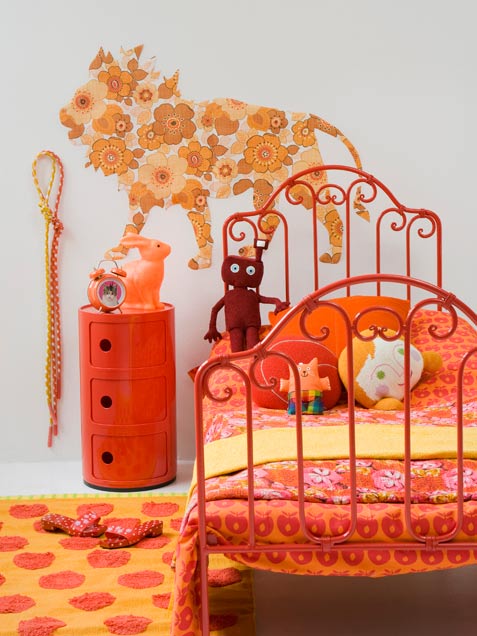
Bright Orange Girl Bedroom

Could the magnetic pieces go on other furniture if they are magnetic?

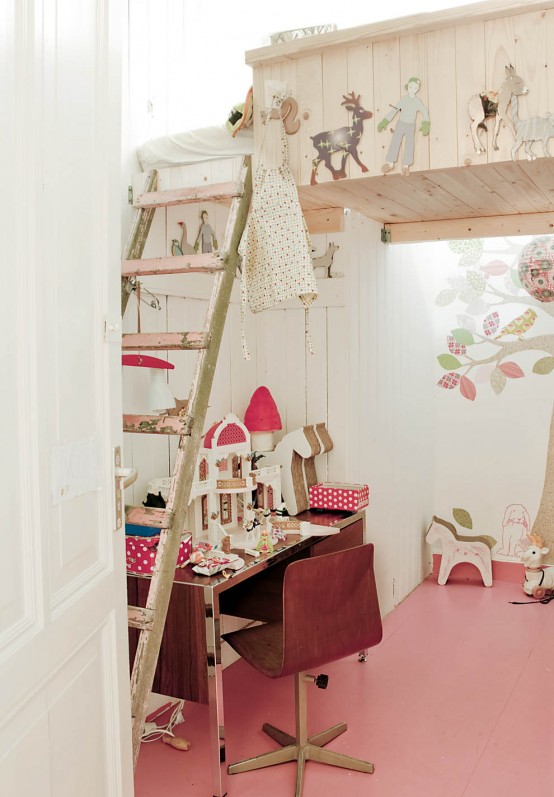
Gorgeous Rustic Girls Room

Letters to improve reading and learning?

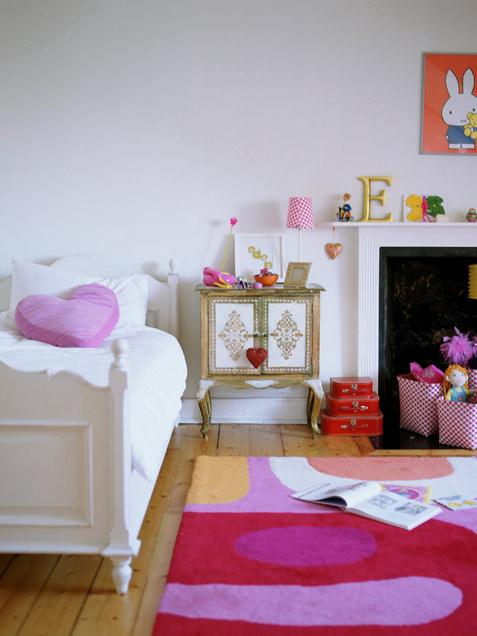
Simple Yet Playful Girl Room
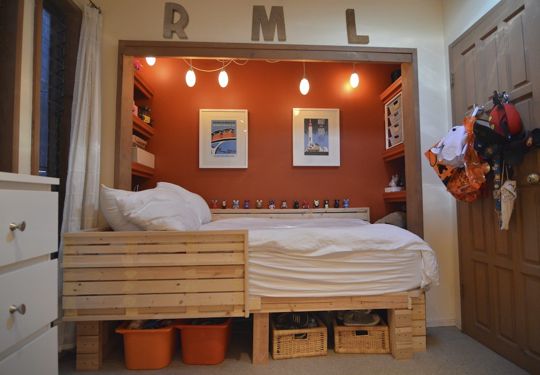
Boys Bedroom Nook

Background design for the magnetic pieces to link to?

Camp In Boys Bedroom

Entire puzzle piece UV? Or just relevant sections?

Boys Room Decorate Like Space

11/02/14 - UV Wallpaper

This is a wall designed as part of a project by Heineken which invited 19 designers to create a concept for a night club which would be shown in Milan Design week 2012. The wall has the technology to be written on in UV paint with an attaching pen.


'Fruit Salad' UV Interior Wall Effect, UV paint on cotton. Fire retardant material, fitted like a wallpaper throughout and lit from above with UV lighting.


UV imprinted wallpaper only shows its pattern in the sunlight.

uv wallpaper

07/02/14 - Meet up

We met up today in the library to go over how we are all developing our ideas.
I had previous missed a session on Thursday so I was caught up with how everyone had moved the idea on in that time. How we present our idea was the main topic of discussion and we discussed designing and creating the prototype within the next week (I will be helping Annabelle although she was not there so it will have to be arranged on Tuesday) and how we can generate feedback from potential customers.
It was decided that we would contact a community facility which has a sensory room to understand more about their customers and to see what they thought to our idea. We may also use our own contacts to get a better understanding of what children would like on a wallpaper and what parent's main concerns would be when buying and decorating for a child's bedroom.
We also discussed how we would raise funds to create our product. The most reasonable idea was to go to the bank for a loan and also look into what companies may sponsor a project like ours. We need to look into companies that have sponsored projects before and understand the financial side of how that would impact how much money we would have to put into the project ourselves.
From this session we divided ourselves into two groups so we had the week to focus on either the design and prototype side or the company and market contact side.

03/02/14 - Where sells sensory wallpaper online?

As the sales and marketing manager of our team I have looked into where sells similar products to the idea we are developing online, which would be easily accessible for parents to buy.

ROMPA

Rompa is a world leader in sensory equipment and multi sensory environments (MSE). Rompa sell a variety of kits to help develop an individual's disability. Each sensory kit Rompa provides is £270, a steep price for a working class parent. They have tactile, visual, sound and aroma kits. The visual kit comes with a UV lantern, glitter wands, glow craft materials and 'visually stimulating balls'. They also sell individual visual equipment such as, a bendy mirror which distorts your reflection (£342) and colour changing eggs (£6). Both of these products are aimed at children age 3-5.

Rompa also sell wall panel which help advance visual skills. The panels are wifi compatible and can be either wall mounted or mobile. The wall panel provide a textured surface and is made from environmentally friendly materials. However the wall panels range in price from £500 - £7,194.
Rompa also provided links to free resources. They are sensory room wallpapers for the desktop. They are virtual wallpaper designs easily downloadable for PCs and laptops.

EXPERIA

Another company which provides sensory equipment is Experia. Experia are 'the leading designers, manufacturers and installers of sensory equipment, sensory rooms, bubble tubes and new sensory products.'
Experia provide a variety of products for both facilities and for the home and cover a range of senses which benefit people of different disabilities. They sells a variety of wall panels, including, tactile walls, a sound board, UV / LED walls with bubbles and UV rods, mats and strands.
They also sell sensory for the home kits which are £1,199. These kits include bubble tubes, effects wheels, an aroma kit and 'classics for relaxation.'

SPACEKRAFT
SpaceKraft develop and manufacture a full range of sensory products that provide solutions for carers ad teachers who face the difficult challenges with disabled people. SpaceKraft provide a free design service in which the customer can receive 3D images of what the finished room can look like. This service is mainly for schools. SpaceKraft provide a range of information and products for all ages, with a specific section on elderly sensory rooms. They also provide sensory kits and packages with prices ranging from £1,845 to £3,395.

Friday, 31 January 2014

31/01/14 - Customer Profile

Today we met up outside of class time in the library to brain storm our target customer.

We thought about the following areas when thinking about the customer;
- working class? middle class?
- parents/carers? of disabled children? or not?
- style awareness?
- want to improve childs skills?
- no or little access to facilities
- age range? 2-5 6-10 etc.
- busy lifestyle

We then focused on a more specific customer:

Parent of a visually impaired 3 year old girl
- working class
- stay at home mother
- 2 other children
- 3 bedroom house
- husband in full time work
- has a part time carer?
- decorates own house
- shops online
- shops on a high street level

-what are parents/carers entitled to when having a visually impaired child?


We then began to think of how we could expand the idea to a larger range.
We decided on a range for working class (tesco?) and middle class (mothercare? john lewis?)
Within each range had products targeted towards boys and girls
Within each range had age appropriate products for the following ranges: 2-5, 6-10, 11-13

To make the products price appropriate they would need to have different elements.
Cheaper: magnetic?
Middle: Interactive?

From this we decided to look at different areas in the market for next friday:
ANDREA: What are carers entitled to?
CARA: Who sells it online?
AMY: What high street stores have interior ranges that our product could fit into?
ANNABELLE: What features could we have in our wallpaper?

30/01/14 - Business Basics

Today's session was all about the business side of designing and creating a new product. This area really interests me as I have always wanted to know more about marketing and designing for a customer. I am also really interested in trends and trend prediction and it was interesting to understand how trends come about..

Political
Economic
Sociological
Technological
Legal
Environmental

Trend prediction and customer based designing is something we touch on lightly but not in such detail so I really enjoyed learning more about this area and the variety of ways to go about looking into trend research that has already been undertaken

Trend Hub
Just Style
WGSN
Mintel Reports
Passport

Although trend prediction isn't vital for the project we are currently developing, I will definitely use this information in other areas of my course.

When discussing our project together as a group, it came to light that similar ideas were being developed by other groups. If this issue was to come about in a real life situation we would need to look into 'safe-guarding' our idea to have ownership of the work we have done.

After beginning to understand developing a customer profile, we decided we would discuss this further tomorrow when we meet up for an hour.

Tuesday, 28 January 2014

28/01/14 - Brainstorming ideas

Today's session was used to brain storm ideas for the project.
To get a focus on the ideas, we first started off composing a consumer that our products would be for and thought of their needs and what they would be missing and then a solution to the problem.
An example of this is:
USER: parent of a disabled child
NEED: struggle to provide a suitable living space for their child to develop.
INSIGHT: affordable way to adapt their home to cater for their child's needs available on the high street

We thought about how we would be able to create something affordable, practical and appropriate for a variety of disabilities.

We then used post-it notes (see picture below) to brainstorm ideas.
To successfully brain storm we had to follow this:
- keep it going
- encourage ideas to build new ideas
- get everyone's contribution
- QUANTITY
- encourage wild ideas
- be visual


This way of creating ideas was really productive and helped develop current ideas without thinking too much into them. Visually seeing ideas develop and link to one another was useful and helped spark new and unusual ideas amongst us.

After brainstorming we all really liked the idea of creating sensory products for a disabled child's room but no one had a lot of strong knowledge of the various disabilities or the required environment that children would need to best develop.
We decided to go away and research into various disabilities and discover what they need day to day and would be beneficial to have in their homes.
I think that finding a strong character profile for our ideal consumer is the best idea so it really helps us to understand who we are designing for and will help us to target our research to one specific area.
We have also decided to book a room in the library for an hour outside of lecture time so we can really develop our ideas together.


Saturday, 25 January 2014

23/01/14 - Team Development using Belbin

Today's session focused on getting to know each others roles within the team using the Belbin questionnaire. The questionnaire is devised to find out what kind of role you play within a team. The Belbin method proposes 9 roles that each person can fit into . Each role plays a part in the larger collective of every member.
The 9 key roles are:
- Plant
- Resource Investigator
- Co-Ordinator
- Shaper
- Monitor/Evaluator
- Team Worker
- Implementer
- Completer/Finisher
- Specialist

 Each key role fits into three broader areas; Thinking / People / Doing

Thinking
- Plant
- Monitor /Evaluator
- Specialist

People
- Co-Ordinator
- Team Worker
- Resource Investigator

Doing
- Completer/Finisher
- Implementer
- Team Worker

From this information we each completed the questionnaire to work out which role we all best fit into. The ideal situation was to have a member of the team in each of the broad areas. This worked successfully for our group as shown in the picture below we had a person which fit with each of the broader areas, although today we had Amy missing.
The questionnaire helped to understand each person's strengths and weaknesses and to give a general understanding of how the group dynamic will work and how each individual will work best.

We also used this session to discuss any research/ideas we had collected since Tuesday.
Andrea brought forward the idea of creating sensory rooms for autistic children. The idea was to create interior pieces that could be used in a variety of locations to help calm children.
We all felt positively about this idea and Annabelle had looked into themochromic inks which are inks that change colour when heated or cooled down. Combining these ideas we came up with an idea of creating interior pieces which could be bought in retail stores and could be put into the home.
Having done some trend research, I suggested looking at the trend 'FOCUS' when imagining and designing the wall/floor/furniture pieces. The trend fits well with the idea as the description of the trend is to 'create a sensory experience'. The trend has a lot of calming aspects which I think would work well with the environment we are trying to create.

From this session we have decided to go away and look further into the general field in which we want to design for. It is too early on in the project to condense our research down and have a specific focus. Also without having Amy in to contribute ideas, we didn't want to get too ahead of ourselves before discussing it as a whole group.

Grid which shows each member's strongest and weakest roles and which category they fall under


21/01/14 - Introduction to the module.

Today was the first session of the new module 'Global Fashion & Textile Sourcing'.
This module is all about developing an awareness of relevant industry sources and understanding the factors that impact the current practice of sourcing of fashion, textile and surface design products. We will also begin to understand the factors that may affect businesses in the future and how they will impact on careers within the industry.

This module is a group project in which we will come up with a concept for a possible product. With knowledge of a variety of fields, each group contains students from both the Textiles with Surface Design (TSD) course and the Fashion and Textile Buying Management (FTBM) course. This brings knowledge of both the business and the design sides.

Our group is made up of five of us, three from the TSD course and two from the FTBM course. This session was mainly focusing on getting to know each other and swapping contact information so that we can all communicate easily with one another throughout the duration of the project.

We discussed the elements of our courses that we were most interested in and what we were interested to bring into this project. We didn't want to commit to roles or tasks this early on in the project but talked through each role and put ourselves forward for the roles we were most interested in.

By the end of the session we loosely allocated the following roles to each person (but this doesn't mean they won't change!)

Aysha
- Managing Director (MD)
- Financial Director

Cara (Me)
- Operations Manager
- Sales & Marketing Manager

Annabelle
- Head of Design
- IT Manager

Andrea
- Head of Technology
- Human Resource Manager

Amy
- Head of Sourcing
- Merchandising/Logistics Manager

At the end of the session we decided to go away and think about the brief and come back for Thursday with a few ideas/possibly research to get the ball rolling for the new project.